






Generic selectors
Exact matches only
Search in title
Search in content
Post Type Selectors
Little-Athletics-Australia-Logo

Discus

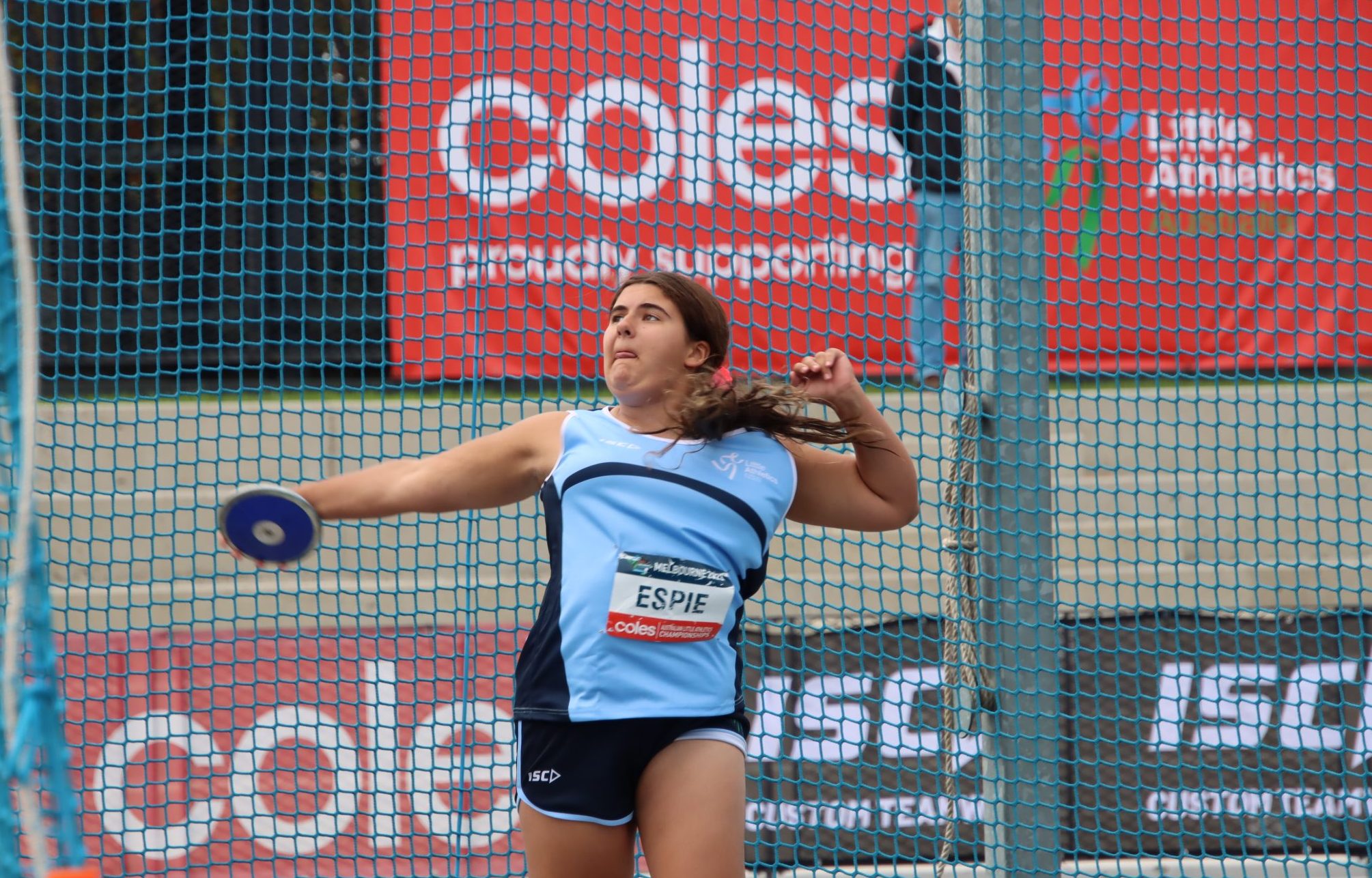
Discus Skills

Technique 

  • Enter circle (it is good to practice entering and exiting from the back). 
  • Body position. 
    • Stand tall. 
    • Body sideways with discus side backwards. 
    • Feet shoulder-width apart. 
    • Weight on balls of feet. 
  • Hold discus. 
    • Four fingers spread apart and thumb resting on top. 
    • End of fingers over the edge. 
    • Avoid “gripping” too hard. 
  • Action. 
    • Bend back leg. 
    • Turn backwards at hips so discus well behind body. 
    • Unwind lower body and then upper body. 
    • Discus arms follows last and then discus is released. 
  • Exit out the back of the circle. 

Modification Options 

  • Adjust size or weight of discus to match the athlete’s upper body strength and control. 
  • Use a modified training discus or frisbee (safety practice discus, foam discus). 
  • Allow different throwing actions. 
    • Underarm toss.  
    • Underarm roll. 
  • Offer seated throws for relevant athletes. Seated athletes can complete multiple throws in a row to help with the functioning of the event.  
    • Throwing frame preferred. 
      • Ensure the chair is correctly secured to the ground. 
      • Use appropriate straps / postural anchors such as a pelvic belt and shin belt. 
      • Athlete may use a footrest or foothook. 
      • Chair is positioned facing sideways to the field. 
      • Swing arm in readiness prior to release. 
      • More or less trunk rotation depending on trunk strength. 
    • Can use own wheelchair or a heavy everyday chair. 
      • Brakes on. 
      • Seat belt and chosen postural supports on. 
      • Chair or wheelchair can be anchored/held by a helper adult to prevent it from tipping/rocking - hold the back of the chair on the opposite side to throwing arm. Adult ducks down so they don’t get hit with arm on follow through. 
      • Low backrest if available. 
      • Non-throwing hand to brace on thigh or arm rest or top of wheel. 
    • Trial different rotational angles for the chair ie throwing side rotated slightly forward. 
  • Use bright markers for the throwing and sector lines. 
  • For athletes with vision impairment, use a guide athlete. See the sensory page for more information.

Before you Start  

  • Correct weight of discus for the athletes age or athletes' ability. 
  • Throwing circle is clear of debris. 
  • Waiting athletes stand behind the circle. 
  • Officials face the circle. 

Safety  

  • A cage or safety netting is in place. 
  • Defined throwing and landing area.   
  • Athletes throw when told to go. 
  • After the throw, the discus is carried back to the circle not thrown or rolled. 

Measuring  

  • Zero end of tape is placed on the nearest imprint made by the discus in the ground to the throwing circle. 
  • Pull tape back through the centre of the circle. 
  • Measure to the inside of the metal rim. 
  • When is the discus a foul?  
    • If the discus lands on or outside the sector lines. 
    • If any part of the athlete touches the ground outside of the circle during the throw (discus must land first before exiting the circle). 
    • If the athlete exits forward out the front half of the circle. 

Recording  

  • Record the distance to the nearest whole centimetre below the distance measured. 
© 2026 Little Athletics Australia Limited

ABN 45 761 248 109

ACN 632 256 181

All rights reserved

Coles Little Athletics Australia acknowledges and pays respect to all traditional custodians of the lands of which we work, run, jump and throw throughout Australia. We pay respect to elders both past, present and emerging.

We are committed to a positive future for all Aboriginal and Torres Strait Islander communities and to honor their ongoing cultural and spiritual connections to this country and recognize the role and value of culture.