


Generic selectors
Exact matches only
Search in title
Search in content
Post Type Selectors
Little-Athletics-Australia-Logo

Triple Jump

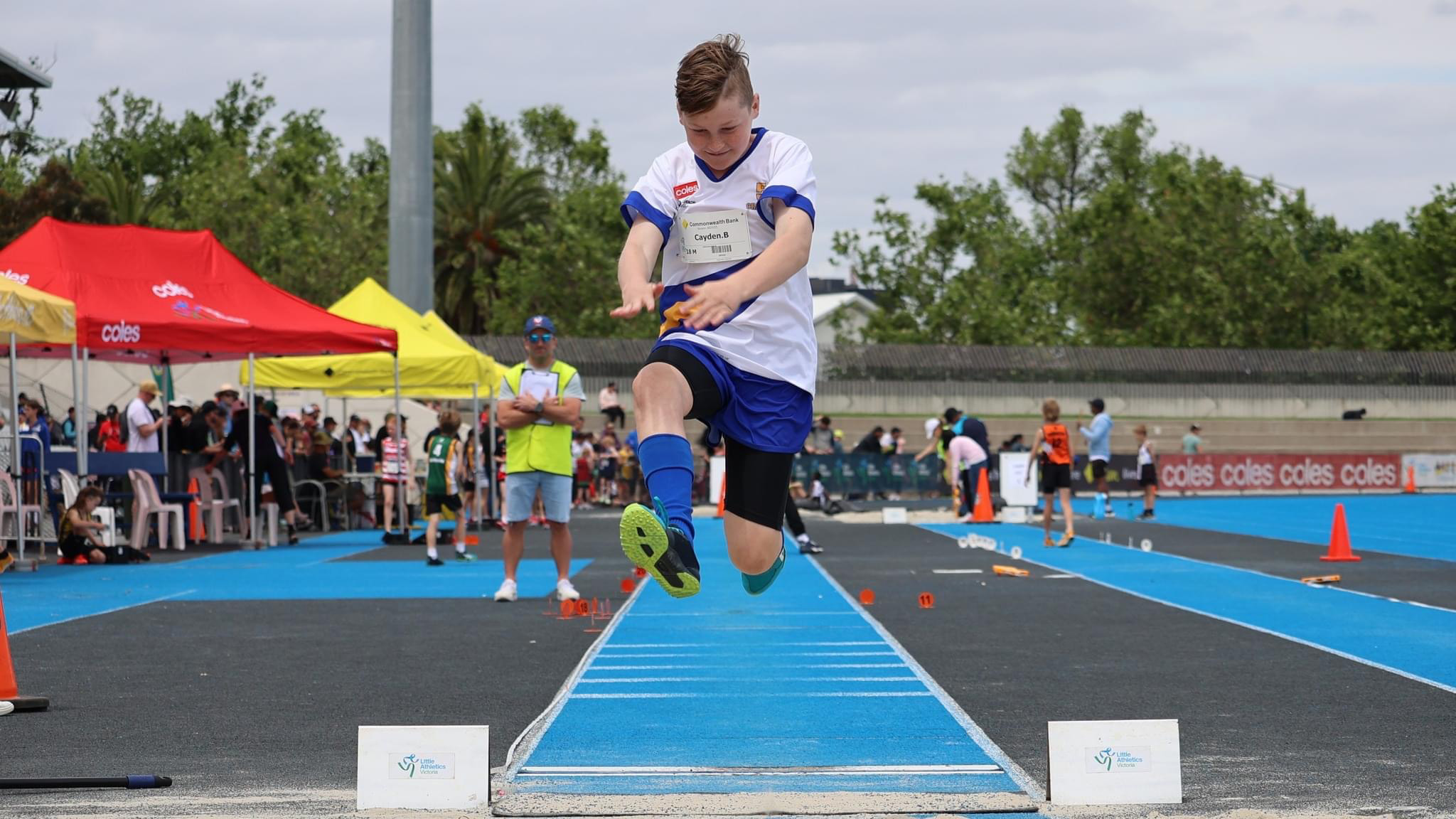
Triple Jump Featured Image

Triple Jump Skills 

Technique 

  • Start at the run-up position. 
    • Run up length is approx. the athletes age in steps. 
  • Body position. 
    • Run tall on balls of feet. 
  • Action - Run Up. 
    • Build up speed – fast steps just before take-off. 
  • Action - Take off. 
    • When reach board or mat, take off from one foot. 
    • Push through calf, thigh and hip. 
  • Action – Flight. 
    • Stay tall with “proud chest” and head upright. 
    • Pattern is - Hop then step then jump. 
    • Foot placement is – preferred leg, other, together. 
    • Hop, step, and jump pace and power even. 
    • Hop.
      • Motion forward.
    • Step.
      • Hold opposite knee high.
      • Motion forward.
    • Jump 
      • Keep head up (don’t look down towards take off board or pit).
      • Motion up and forward.
      • Brings arms through and forward.
  • Action – Land. 
    • Land with feet together.
    • Body weight goes forward (over feet).
    • Hands forward.
  • Exit forward out of the pit. 

Modification Options 

  • Use a wider mat with thin layer of sand on top. 
    • Place mat closer to the pit. 
    • Measure from where the athlete takes off from on the mat. 
    • Appropriate for athletes with shorter jump lengths. 
  • Accept an approximation of the triple jump pattern. 
  • Encourage any part of the jump. 
  • Offer athlete to do long jump and long jump modifications. 
  • Athletes can use a wheelchair by doing wheel pushes in the triple jump pattern. 
    • Find a space away from the pit on clear runway or track. 
    • Ensure there is no risk of the wheelchair ending up in the sand pit. 
    • Create a take-off mark e.g. line or cones. 
    • Athlete completes a short approach of 2 to 3 pushes.  
    • When reach mark, athlete completes a series of strong arm pushes. 
      • Single arm.
      • Opposite arm.
      • Double arm.
      • Measure from take off mark. 
  • Use bright markers for the path to run in and take off areas. 
  • For blind and low vision athletes, use a guide athlete. See the sensory page for more information.

Before you start  

  • Mark the edges of take-off board or mat with bright plastic markers or similar. 
  • Take off board or mat is flush with the ground and pegged in. 
  • Damp sand is raked and sufficiently soft to absorb landing impact. 

Safety  

  • Runway is flat and clear of objects. 
  • No slip hazards on take-off board before each jump. 
  • If rakes, forks or shovels are placed on the ground, face prongs downwards. 
  • Do not leave them in or beside the landing pit. 
  • Rake and level the landing pit after each jump. 

Measuring  

  • Spike from the nearest break in the sand to the front of the take off point. 
  • When is the jump a foul? 
    • Incorrect use of the hop, step and jump sequence. 
    • If the athlete takes off with two feet. 
    • Landing on the runway. 
    • If the athlete touches the ground past the take off board / mat. 
    • If the athlete walks back through the landing area after a completed jump. 

Recording  

  • Record the distance to the nearest whole centimetre below the distance measured. 
© 2026 Little Athletics Australia Limited

ABN 45 761 248 109

ACN 632 256 181

All rights reserved

Coles Little Athletics Australia acknowledges and pays respect to all traditional custodians of the lands of which we work, run, jump and throw throughout Australia. We pay respect to elders both past, present and emerging.

We are committed to a positive future for all Aboriginal and Torres Strait Islander communities and to honor their ongoing cultural and spiritual connections to this country and recognize the role and value of culture.